
A key lesson in the luxury beauty category is simple: A higher price tag does not equal better technology.
When you see world-famous models or Hollywood actors posting selfies with a specific brand's LED mask, they didn't just stumble upon it. They are paid hundreds of thousands of pounds for that endorsement. And where does the brand get that money? By charging you $469 for a device that costs a fraction of that to produce.
This "Celebrity Markup" forces consumers to absorb massive corporate marketing overheads. You are led to believe that because a mask costs ~$676 it must possess some special proprietary advantage. The reality is that the physics of light—specifically 630nm Red Light and 415nm Blue Light—cannot be patented or made 'more premium' by a logo. Light is just light.
Where Your $469 Actually Goes
The Influencer Markup
When you see a Hollywood celebrity or a massive influencer endorsing a $469 LED mask on Instagram, you are directly funding that post. Up to 60% of the cost of premium masks goes straight into influencer marketing budgets, not into the physical technology.
Commoditized Technology
The core technology behind LED LED skincare—light emitting diodes engineered to specific nanometers—is well-established science. The actual cost of producing well-specced LEDs has fallen significantly, yet many premium brands keep their retail prices high.
The 'Prestige Pricing' Illusion
In the beauty industry, there is a psychological tactic called 'prestige pricing'. Brands intentionally price a product at $469+ to trick consumers into assuming it must be 'well-specced' or inherently better than a $199 product. It can make price feel like proof of quality even when specs tell a more useful story.
Optional Add-Ons Add Up
Because these brands operate on massive overheads, they constantly sell more add-ons. Want neck coverge? That's ~$405 extra. Want a protective bag? $47. Want blue light for blemish-prone skin? Another ~$473 mask.
Industry Experts Weigh In
"If you strip away the designer packaging and the celebrity endorsements, a ~$676 mask and a ~$270 mask often use very similar components. With premium brands, a large part of the price reflects the logo rather than the technology."
Best LED Face Mask Editorial Team
Research & Editorial Team
"Our advice is to compare specs, not brands. Look at the nanometer wavelengths (630nm red, 415nm blue) and the accessories included. If two devices are similar on paper, paying an extra ~$405 for the brand name rarely makes sense."
Best LED Face Mask Editorial Team
Research & Editorial Team
The Price Breakdown
The Solution: Direct-to-Consumer Value
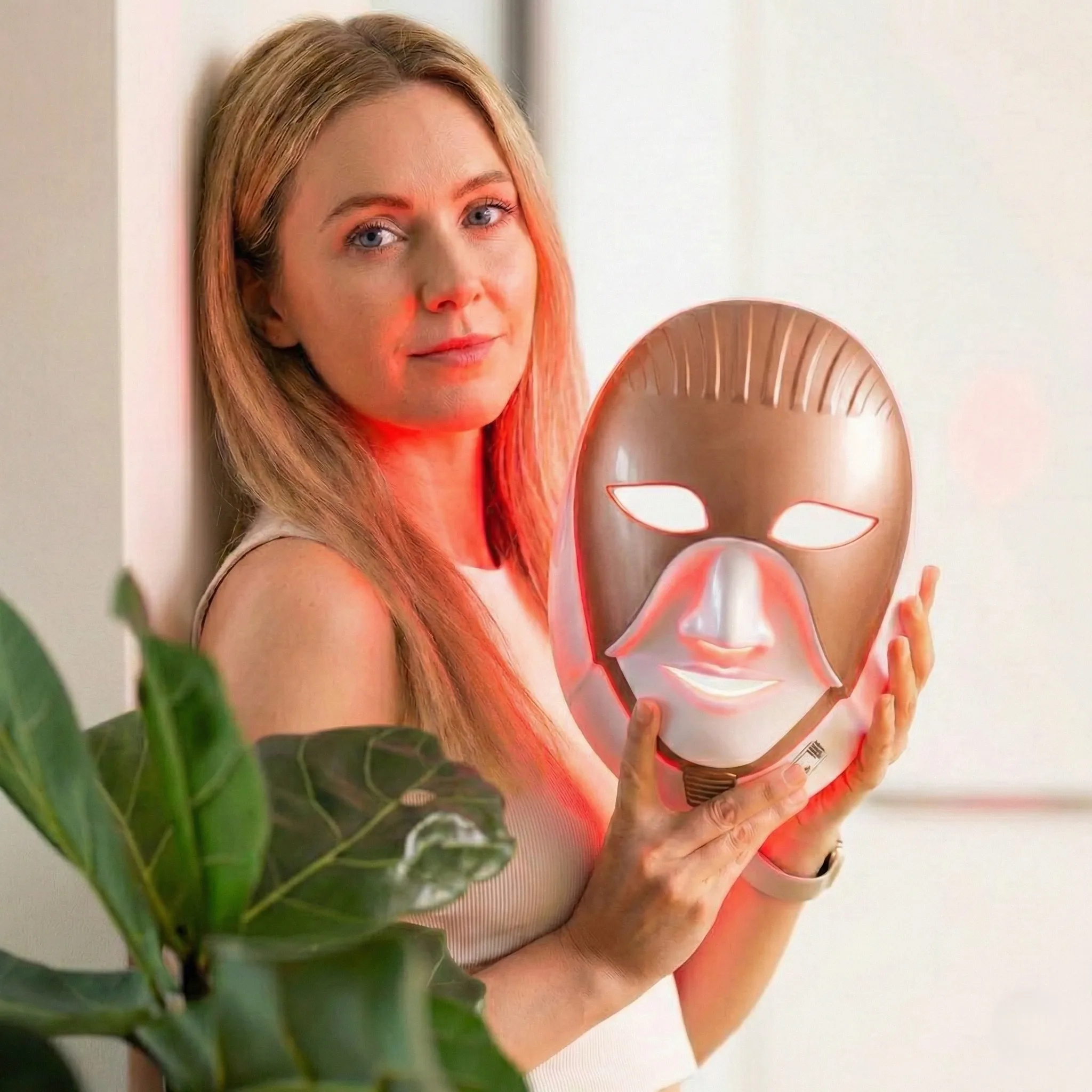
Buudy 7 Colour LED Mask
Buudy was founded on a simple principle: make well-specced skincare easier to access. By refusing to pay millions to celebrities for endorsements, Buudy is able to pour 100% of its budget directly into the hardware.
That means at $199 you are getting 7 distinct wavelengths, 192 high-density LEDs, and a built-in neck adapter. You are paying for the electronics and the design—not a celebrity marketing budget.
The Direct-to-Consumer Promise
- Zero Celebrity Markup: We don't pay influencers, we pass the savings to you.
- Capable Hardware: 192 dense LEDs across 7 light modes.
- Transparent Pricing: $199 includes the face mask, neck adapter, and all accessories.
- Strong Customer Feedback: A large base of organic, un-paid customer reviews in the UK.