Understanding LED Light Colours: What Each Wavelength Is Used For

LED masks come with different colour options, but what does each colour actually do? Here is a plain-English breakdown of the 7 most common LED wavelengths and what each one is typically associated with in skin care contexts.
If you have looked at LED face masks, you have probably noticed that they come with different colour options. Some masks offer just one or two colours, while others include up to seven. But what is the difference between red and blue? What about green or yellow? Here is a straightforward guide to help you understand what each wavelength is commonly used for.
Red light (approximately 630nm) is the most widely used and most studied wavelength in LED skin care. It is commonly associated with supporting the skin's natural renewal processes. Many people who use red light report that their skin feels smoother over time with consistent use. Red light is featured in virtually every LED mask on the market, from budget options to premium devices.
Buudy 7-Colour LED Mask
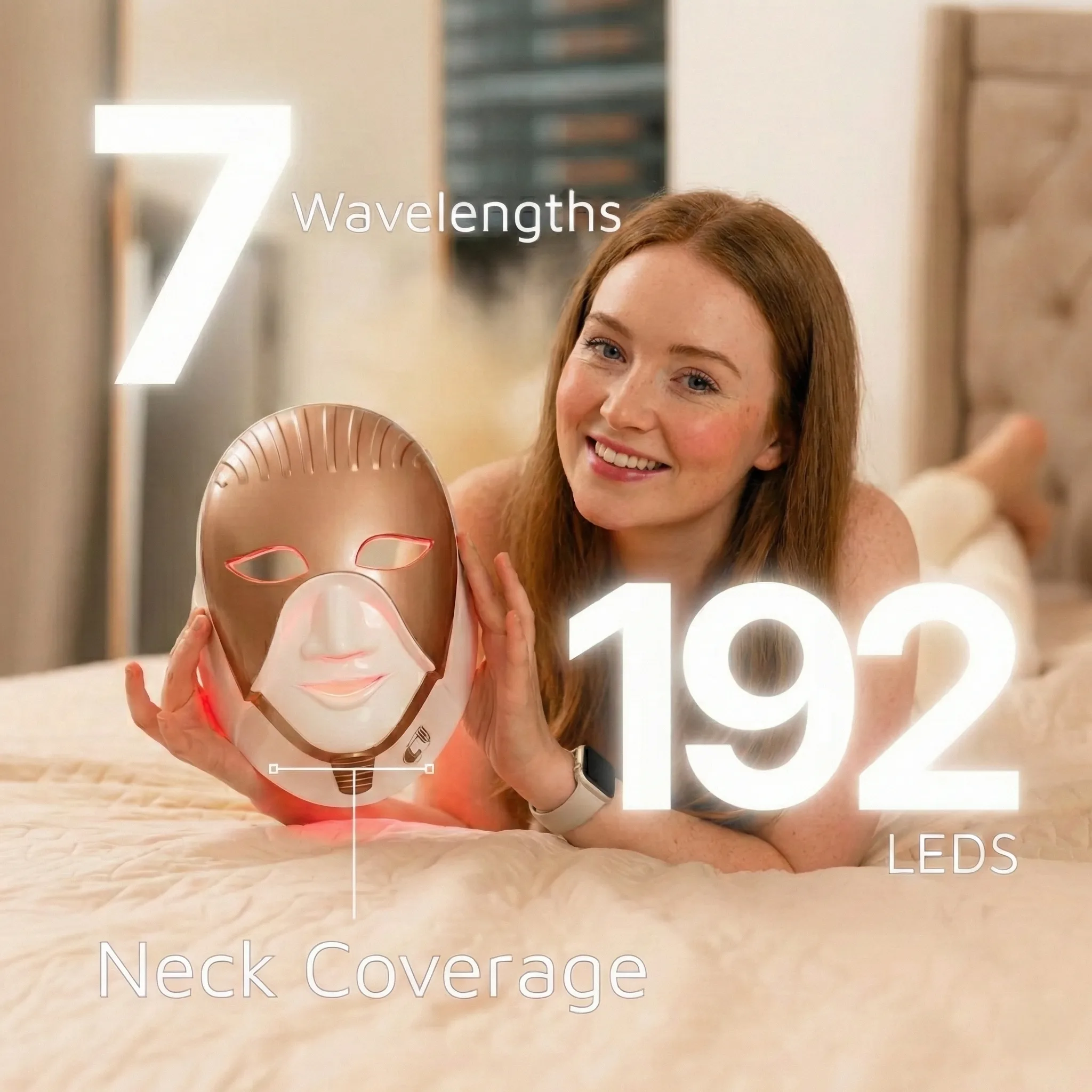
The Buudy mask offers 7 LED colour options and includes integrated neck coverage — features that many competitors charge significantly more for or sell separately.
Near-infrared light (approximately 850nm) is not visible to the human eye, but it is included in many LED masks. It penetrates deeper than visible red light and is commonly used in physiotherapy and wellness contexts. In the context of LED masks, near-infrared is often positioned as a complement to red light for a more comprehensive routine.
Blue light (approximately 415nm) is the second most popular wavelength. It is frequently discussed in relation to blemish-prone skin. Many LED mask manufacturers include blue light as a standard feature, and it is one of the more well-researched wavelengths in the context of dermatological applications.
Green light (approximately 525nm) is less commonly discussed but is included in many multi-colour devices. It is typically associated with addressing uneven skin tone and is highlighted by some manufacturers as useful for those dealing with sun spots or pigmentation concerns. Research in this area is less extensive than for red or blue light.
Yellow light (approximately 590nm) sits between red and green on the spectrum. It is often described as a soothing wavelength and is associated with reducing the appearance of redness. Some users with sensitive skin report finding yellow light sessions comfortable and calming, though individual experiences naturally vary.
Cyan light (approximately 490nm) falls between blue and green. It is one of the less common wavelengths and is not included in all multi-colour masks. Manufacturers that include it sometimes describe it as a multipurpose wavelength that combines some properties of both blue and green light.
Purple or violet light is sometimes included as a combination of red and blue wavelengths emitted simultaneously. The idea is to offer some of the properties associated with both colours in a single session. Not all masks include this as a separate option — some achieve a similar effect by simply running red and blue LEDs at the same time.
When choosing a multi-colour LED mask, consider which wavelengths are most relevant to your interests. If you are primarily interested in general skin wellness and renewal, red and near-infrared may be sufficient. If you want more versatility for different uses, a 7-colour device gives you the most options. Keep in mind that having more colour options does not automatically make a device better — the quality of the LEDs and the precision of the wavelengths matter just as much.
In the UK, the Buudy 7-Colour LED Mask offers all seven wavelengths we have discussed here, plus neck coverage, at $199. CurrentBody offers a popular red/near-infrared device that focuses on fewer wavelengths but at a premium build quality. Omnilux provides clinical positioning with a focus on red and near-infrared. Each approach has merit depending on your priorities and budget.
We hope this guide helps demystify the colour options available in LED masks. As always, we recommend doing your own research, reading multiple reviews, and consulting a professional if you have specific skin concerns before making a purchase decision.